
River Rafting
Is River Rafting in Rishikesh Safe? An Honest Answer
By Hem Tiwari · Published 9 October 2026
River Rafting
By Hem Tiwari · Published 9 October 2026
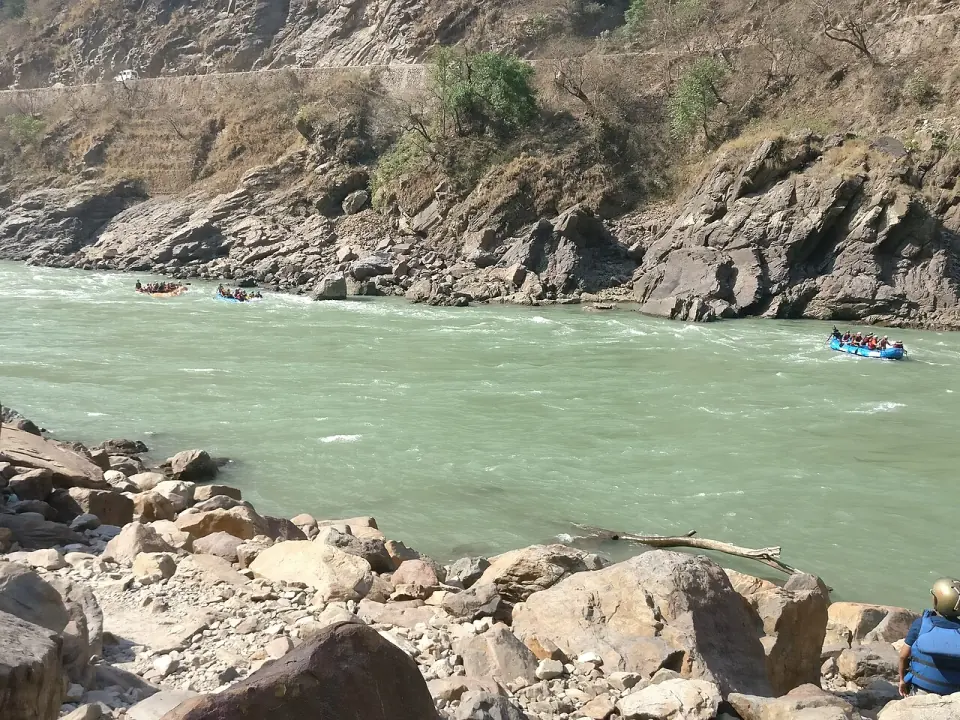
The honest answer: river rafting is an adventure sport and it carries real risk, but with a properly run trip, correct equipment and a guide who briefs you and makes sensible decisions, most trips pass without any problem. Accidents do happen on the Ganga, usually when conditions are ignored, equipment is poor or rules are skipped. We have not found a reliable public count of incidents, so we are not going to quote a number. What we can do is tell you what makes a trip safer and what to check.
The Ganga at Rishikesh is commonly described as Grade I to IV on the international scale. Well known rapids such as Three Blind Mice, Roller Coaster and Golf Course are usually rated Grade III and The Wall is usually rated Grade IV, although grades shift with the water level and sources disagree by half a grade. Our rapids and distances guide explains the scale. Ask which rapids your chosen route includes.
There is no single depth. The riverbed alternates between shallow, rocky stretches and deeper pools, and the level changes with the season and with rainfall upstream. This is one reason rafting never depends on the depth of the water but on the life jacket: a properly fitted jacket keeps you floating, and the guide decides where the raft goes.
Whoever you book with, ask for these and do not go without them:
These are the same checks we apply on our own trips, where licensed, qualified guides give the briefing and safety instructions, and where life jackets, helmets and paddles are checked before you start.
On our trips swimming is not required. Read our non-swimmers guide for the questions to ask any operator.
Be wary of anyone who skips the briefing, offers no helmets, will not tell you the route or the number of guides, or pushes you to raft in conditions that look wrong. Compare operators using our guide to prices and inclusions, then send us your date and group size and we will answer in writing.
It involves risk, like any adventure sport. A trip with a certified guide, fitted lifejackets and helmets and sensible decisions about weather is a very different thing from one without them.
Beginners raft every day. Start with a shorter route, listen to the briefing and tell the guide about any health issue.
Fatal accidents have been reported over the years. There is no reliable public figure we can quote, which is why we focus on how to reduce risk: certified guides, fitted equipment and correct conditions.
It varies from shallow to deep pools depending on the stretch and season, so do not rely on depth. Rely on a fitted life jacket and your guide.
Rafting on this stretch is normally closed in the monsoon. See when rafting is open.